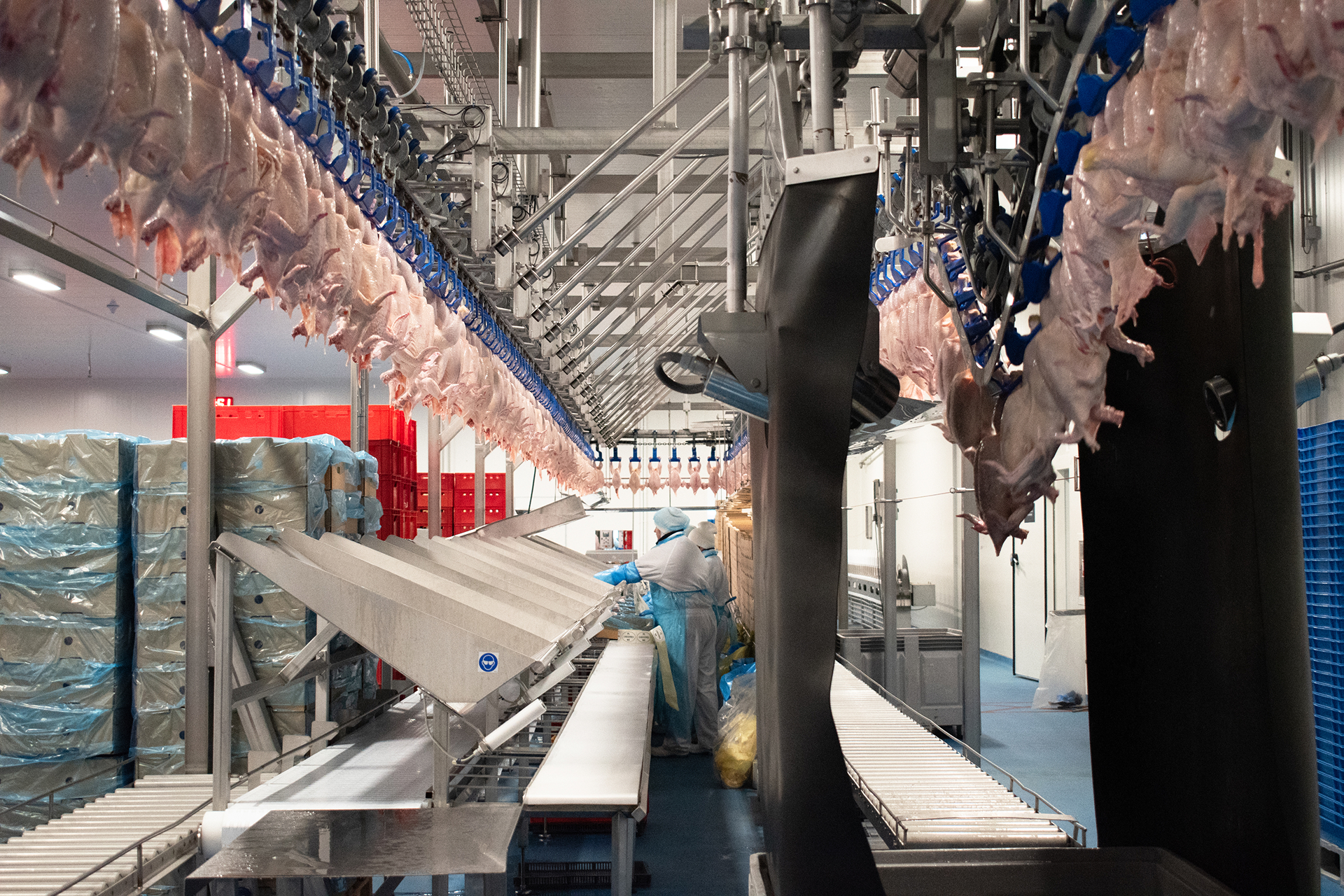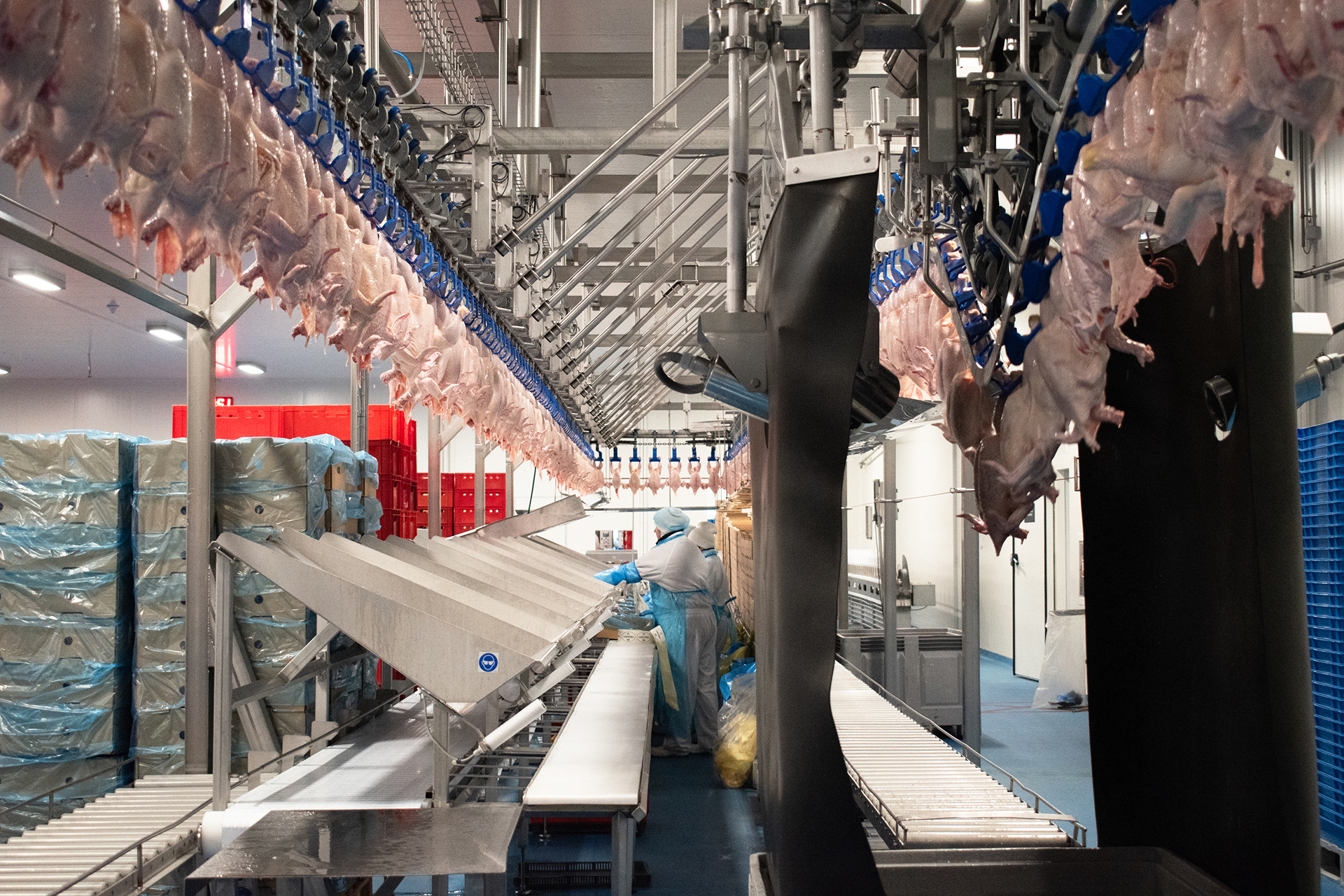
For much of its history, quality control in meat processing has rested on human judgement: Inspectors positioned at fixed points along the line, evaluating carcasses at staggered intervals and extrapolating conclusions from samples rather than totals. As processing speeds have risen and margins have tightened, that model is increasingly being challenged by an alternative: continuous, automated visual inspection powered by artificial intelligence.
A structural shift, not a cyclical one
The pressure driving this shift is structural rather than temporary as poultry is gaining an advantage in the global meat market. This is because chicken can provide consumers with an accessible source of animal protein at a relatively competitive price. As such, global poultry consumption is projected to reach roughly 145 million metric tons by 20301, and industry forecasts anticipate a further rise to approximately 177 million metric tons by 20352 – a 20 percent increase over the coming decade. At the same time, labour shortages and rising labour costs in meat processing are widely described within the industry as persistent. Resulting in a reduced availability of skilled staff while line speed exceeds what manual inspection can reliably track.
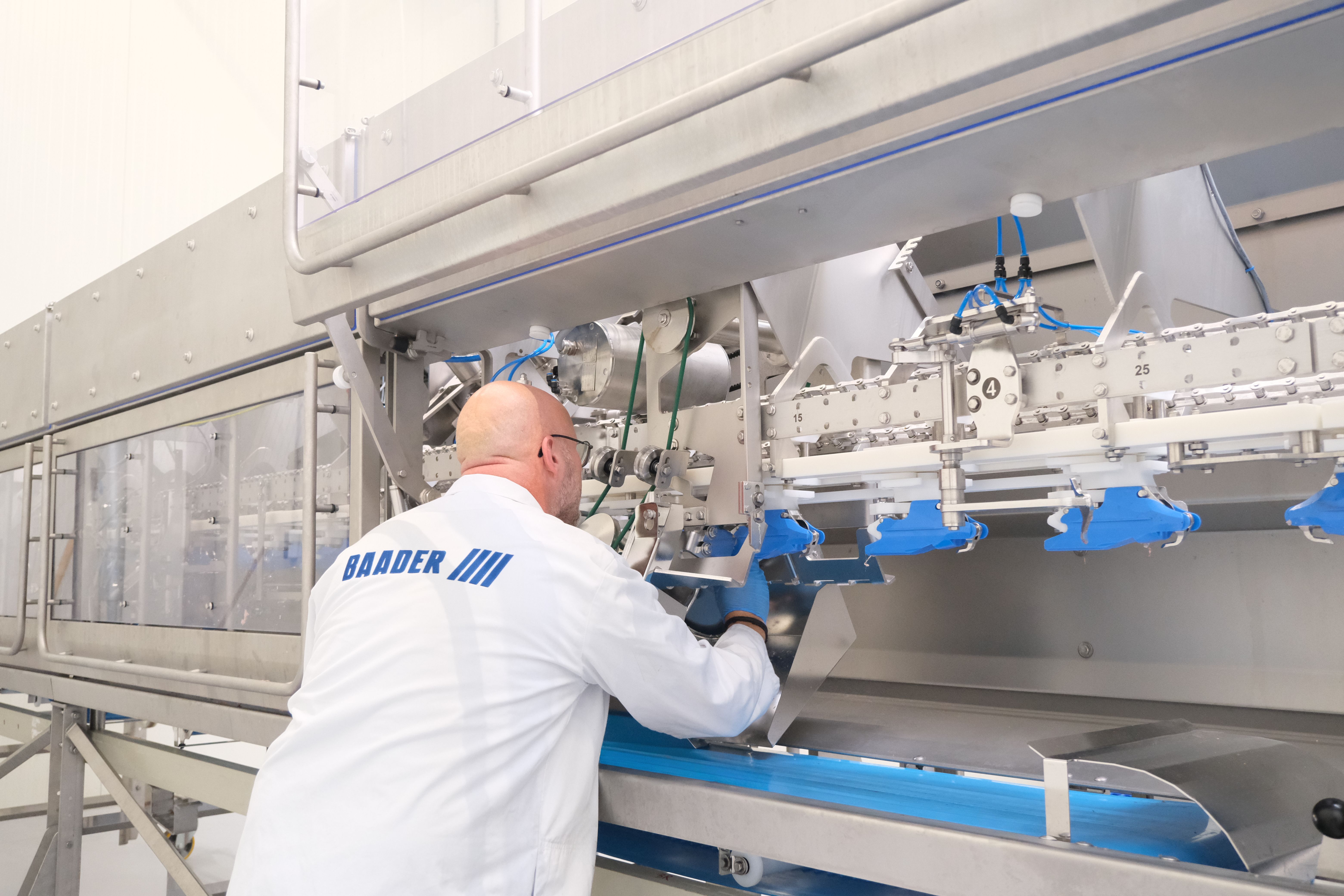
This combination – rising volume, tightening margins, and constrained labour supply – has reframed automated visual inspection from an optional efficiency measure into what a growing number of processors treat as operational infrastructure. These factors were also the motivation behind the development of the BAADER ClassifEYE.

Software-first advantage
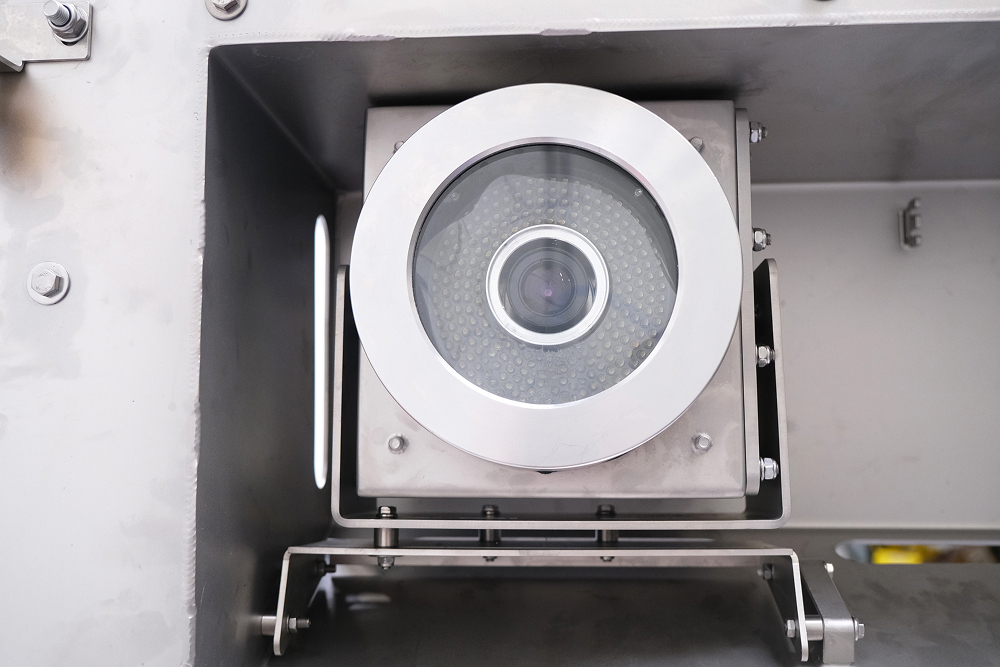
A recent case in point: ClassifEYE White Meat Deboning saw model accuracy improve by 12 percent on average in a recent release – rolled out simultaneously to all connected customers. No hardware changes. No production downtime. Just better performance, delivered overnight.
What continuous inspection changes
The core distinction between manual and automated grading is not primarily speed but coverage. Manual inspection, by its nature, samples: a limited number of inspectors evaluate a limited number of birds at fixed points in a shift with judgement that inevitably varies with fatigue, experience, and time of day. Vision-based grading systems, by contrast, evaluate every unit passing through the line, at full production speed, applying identical criteria to every single bird regardless of shift or hour.

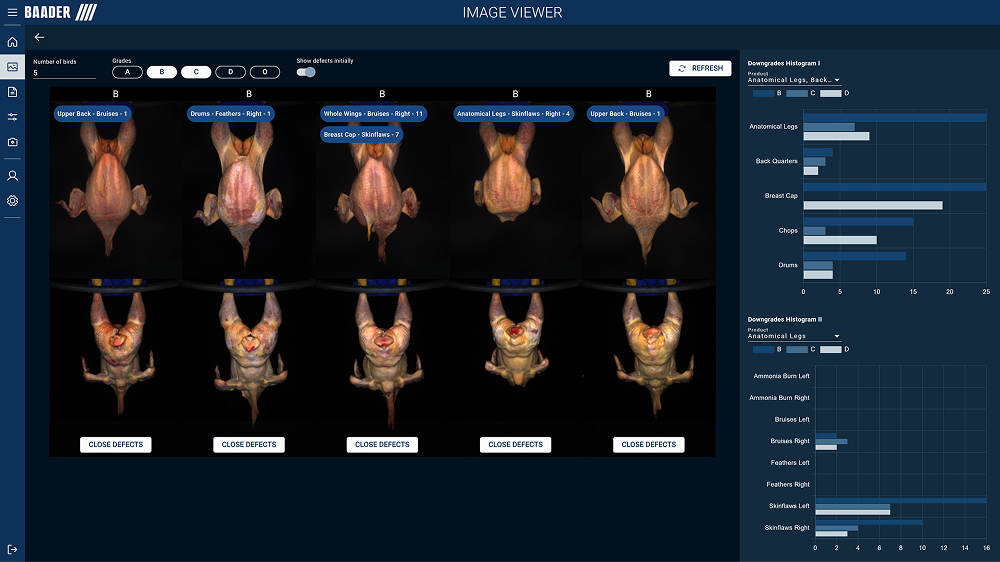
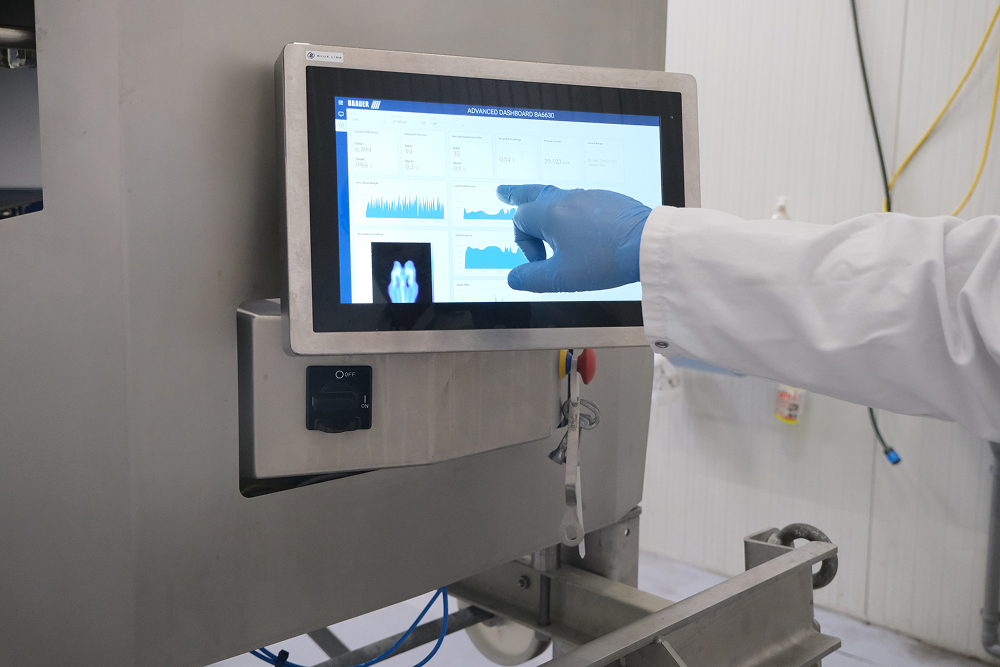
This shift from sampled to total inspection has two downstream effects that are quite significant. First, it generates a structured, continuous data stream that did not previously exist in most processing environments. Second, it enables a shift from retrospective quality assessment toward real-time intervention: rather than discovering a yield or quality problem at the next shift review, deviations can in principle be flagged and corrected as they occur. The dashboard available within the local BAADER ClassifEYE network provides a real-time overview of all detected deficits allowing processors to rapidly decrease carcass damage and reduce downgrades, ultimately leading to the optimal value of every part of the bird.
Best use of all chicken parts
Withing poultry-specific processing, the deboning stations are often overlooked as a loss point. That is why a few grams of meat left on a carcass are not easily visible to the human eye at line speed. Systems like the BAADER ClassifEYE White Meat Deboning however are designed to quantify this residual weight automatically within a few grams identify missed inner fillets and translate findings into financial loss per shift in real time. With help of an LED traffic light signal at the deboning station, operators can act immediately. Based on customer feedback, return on invest is expected within less than one year on various deboning lines. This is just one example of how continuous vision inspection is being applied to a specific, previously under-measured source of yield loss.
In a real-world test
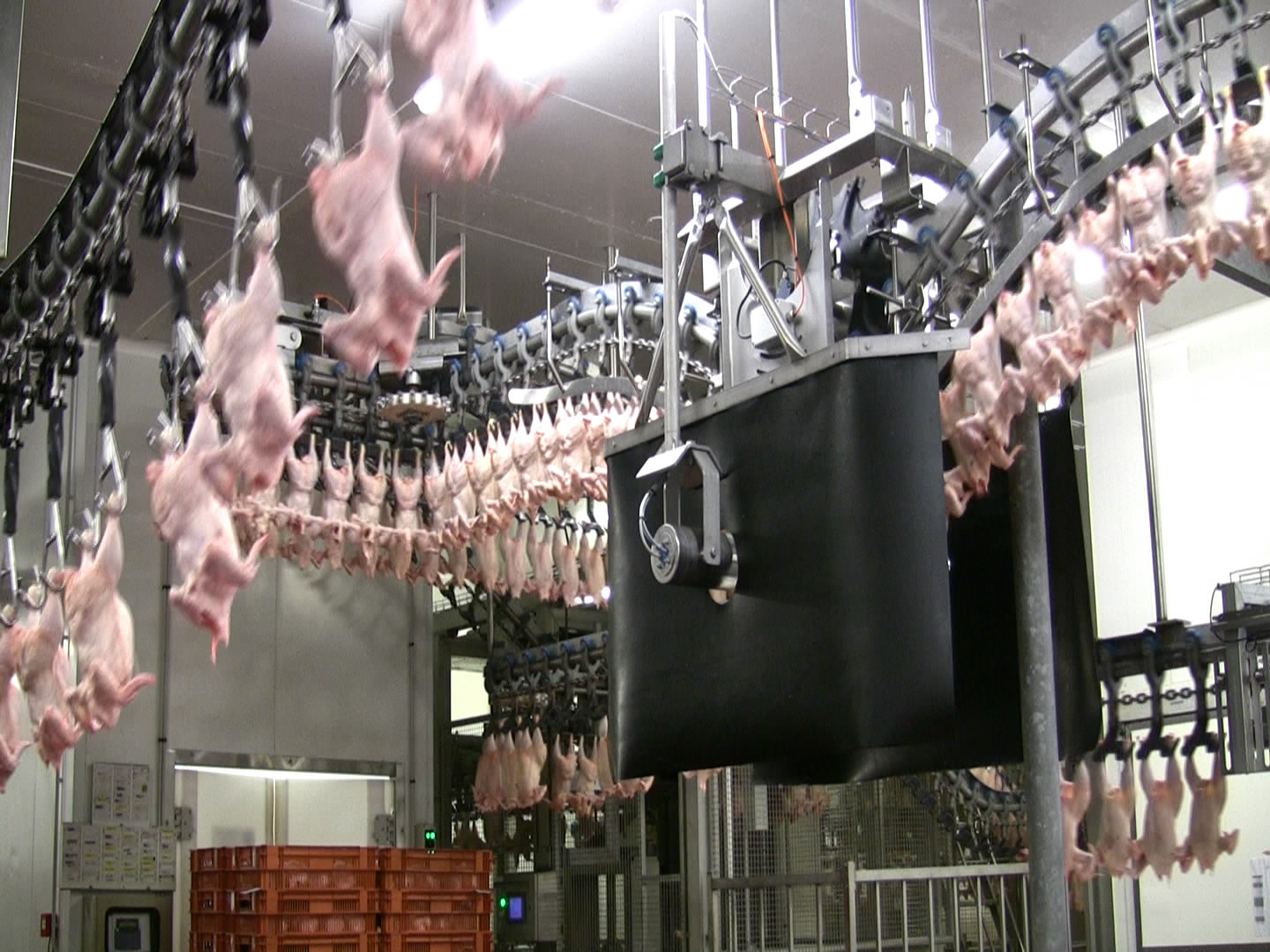
The plant responded with targeted, low-cost corrections: replacing worn plucking fingers, switching from resharpening to timely knife replacement, adding a cleaning nozzle, and adjusting the offal line. Each intervention improved its respective KPI by six to eight percentage points. The savings did not come from the vision system itself. They came from the decisions the plant made because the system showed them where to look. ClassifEYE did not fix the plucking fingers. It told the plant that the plucking fingers needed fixing, every shift, on every bird, before the damage accumulated into a measurable loss. The processor has since expanded its ClassifEYE installation significantly.
At Emsland Frischgeflügel, the use case was different. ClassifEYE White Meat Deboning revealed that a consistent amount of meat was being left on the carcass after deboning, particularly missed inner fillets. The cause was not equipment failure. It was operator technique. Armed with per-shift, per-station data, the plant ran targeted retraining for its deboning staff. The result: a significant annual saving on a single line, achieved entirely through better use of existing resources. No capital expenditure. No process redesign. Just visibility where there had been none.
Both cases share the same pattern. The technology does not optimise the line. It reveals where the line is leaving value on the table, and it does so continuously, objectively, and at a resolution that manual inspection or end-of-shift sampling cannot match. The processor decides what to do with that information. In every case so far, the answer has been: act on it, and keep the system running.
For any processor operating high-volume lines with manual or sample-based quality control: the question is not whether these blind spots exist in your operation. They do. The question is whether you can quantify what they cost you.
Traceability, welfare, and regulation as converging demands
Vision-based inspection is also being drawn into domains beyond immediate yield optimization. Retailers, quick-service restaurant chains, and export markets are increasingly requiring documented, objective quality records as a condition of market access rather than as a differentiator. This shift mirrors the wider regulatory trend toward stricter food safety and traceability requirements identified across recent machine vision market analyses. Because automated systems generate structured records as a byproduct of inspection, they are positioned to meet this requirement more effortlessly than manual processes, which typically require dedicated documentation work to produce comparable records.
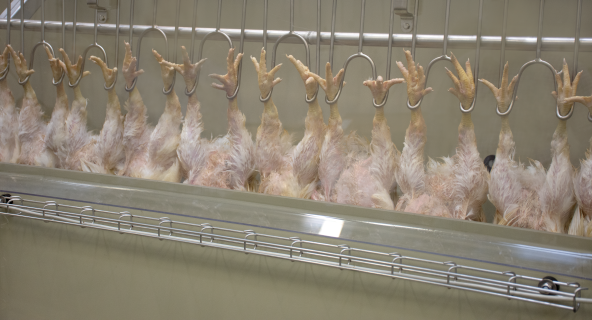
The same goes for animal welfare. Physical indicators such as bruising, scratching, or broken wings can often be traced back to specific upstream events – catching, transport, or stunning – and objective, flock-level data creates the possibility of linking processing outcomes back to individual suppliers. As scrutiny of animal welfare practices intensifies, particularly in European markets, this traceability is increasingly framed not as a quality control feature but as a supplier accountability mechanism.
Regulatory frameworks are beginning to catch up with this technology directly. The EU AI Act, which extends oversight to AI-based systems used in industrial quality control, is prompting vendors and processors alike to treat regulatory compliance as a design consideration from the outset rather than a retrospective adjustment. This distinction will matter increasingly for processors operating in or exporting to the European Union.
An emerging standard
Despite this momentum, adoption of AI-based vision grading in poultry processing is still being used by a relatively small number of progressive processors, primarily in Europe, with earlier-stage adoption elsewhere. Switching to AI pays off though – forecasts for machine vision in food processing project an annual growth of 9 to 15 percent3 through the early 2030s, with quality inspection and traceability being the primary drivers.
Whether this places the industry at an inflection point or simply an early stage of a long adoption curve remains to be seen. Technology is in place, the question is how quickly regulatory, labour, and margin pressure continue to converge across the processing sector.

About Fabian Isernhagen

About Michael Gillespie
Sources
1: OECD/FAO (2026), OECD-FAO Agricultural Outlook 2026-2035, OECD Publishing, Paris/FAO, Rome,
2: OECD/FAO (2026), OECD-FAO Agricultural Outlook 2026-2035, OECD Publishing, Paris/FAO, Rome,
3: U.S. Machine Vision Market Size And Share Report, 2030
This article was first published in the magazine FLEISCHWIRTSCHAFT international in November 2026.