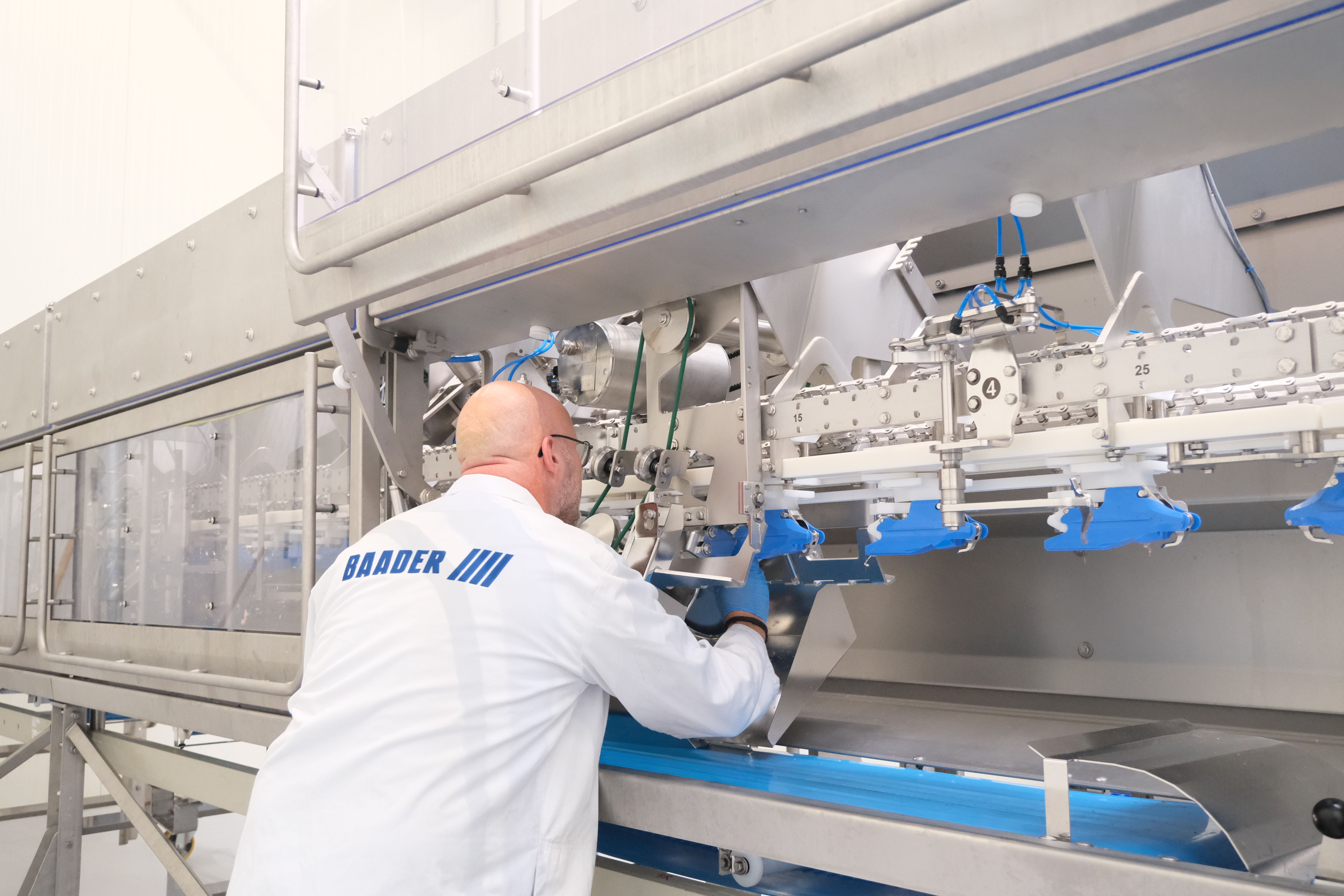
For decades, breast filleting has relied heavily on labour-intensive cone lines. While this approach offers flexibility, the challenges are becoming increasingly difficult to manage. Skilled operators are harder to recruit and retain, fatigue can affect consistency throughout the shift, and increasing production demands put further pressure on both people and available floor space.
The industry is responding with a clear move towards semi-automatic and fully automatic deboning solutions. But automation is about more than replacing manual labour. It is about finding the right balance between capacity, flexibility, yield and consistent product quality.

What You Gain – and What You Need to Consider
Manual deboning has one important advantage: flexibility. Experienced operators can adapt to variations in breast caps and respond to specific customer requirements during processing.
Automation approaches this differently. Advanced measuring systems adjust the process to individual product sizes, while pre-programmed recipes simplify setup and ensure repeatable results.
Space and capacity are also important considerations. Manual lines require considerable floor space to accommodate operators, while automated systems can deliver higher throughput with fewer people and a more compact footprint.
For processors facing labour shortages, rising production targets or limited factory space, automation offers an opportunity to increase capacity while making better use of existing resources.
Maturation: An Important Factor in Deboning Performance
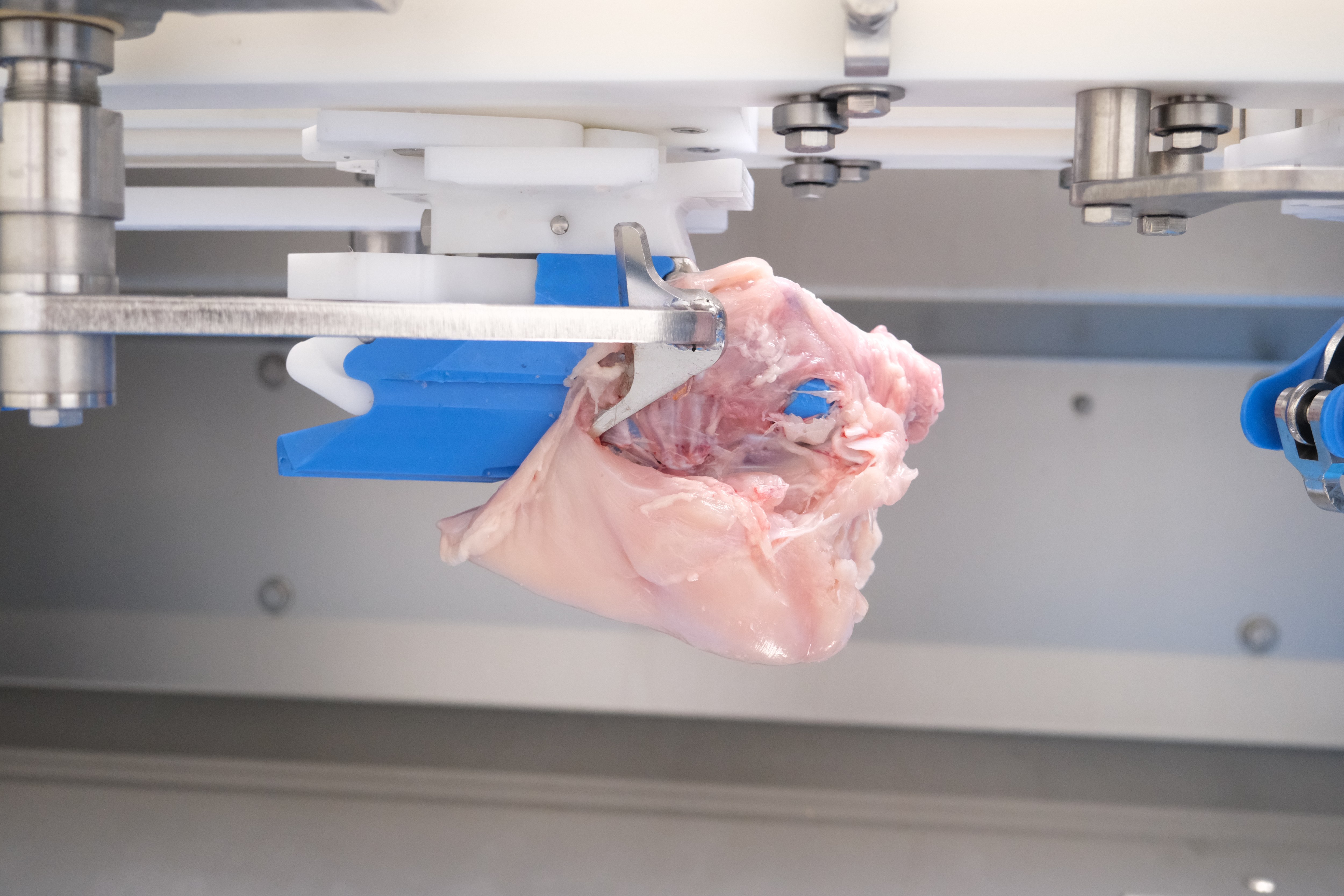
Maturation is often treated as a fixed processing parameter. In reality, it has a direct influence on deboning yield and product quality.
Shorter maturation times can increase production flexibility and help meet demand for fresh boneless breast meat. However, fresher products have firmer intermuscular tissue. This can make it easier to harvest clean, intact fillets with minimal residual meat on the carcass, but it also increases the risk of bone fragments remaining in the fillet. Additional trimming may then be required, adding labour costs and reducing yield.
Longer maturation produces the opposite effect. As the tissue softens, the risk of bone fragments decreases and fillets can be harvested with less trimming. However, softer tissue is more vulnerable to tearing during pulling and scraping, potentially leaving valuable meat behind on the carcass.
The key is finding the right maturation window for your raw material, customer requirements and deboning equipment. It is not simply a question of processing logistics; it is a decision that directly affects yield and profitability.
The Factors Behind Consistent Deboning Performance
Achieving high deboning performance starts well before the product reaches the deboning machine. In addition to maturation, several upstream factors influence how efficiently and accurately the process runs.
- On-farm conditions. Genetics, nutrition and growth conditions influence breast development, bone strength and muscle characteristics. Weak bones and muscular abnormalities can create challenges that even the most advanced deboning equipment will struggle to fully compensate for.
- Chilling method. Water chilling can make the skin easier to remove, but it may also increase the risk of skin tearing. The choice of chilling method therefore has consequences for downstream processing and final product quality.
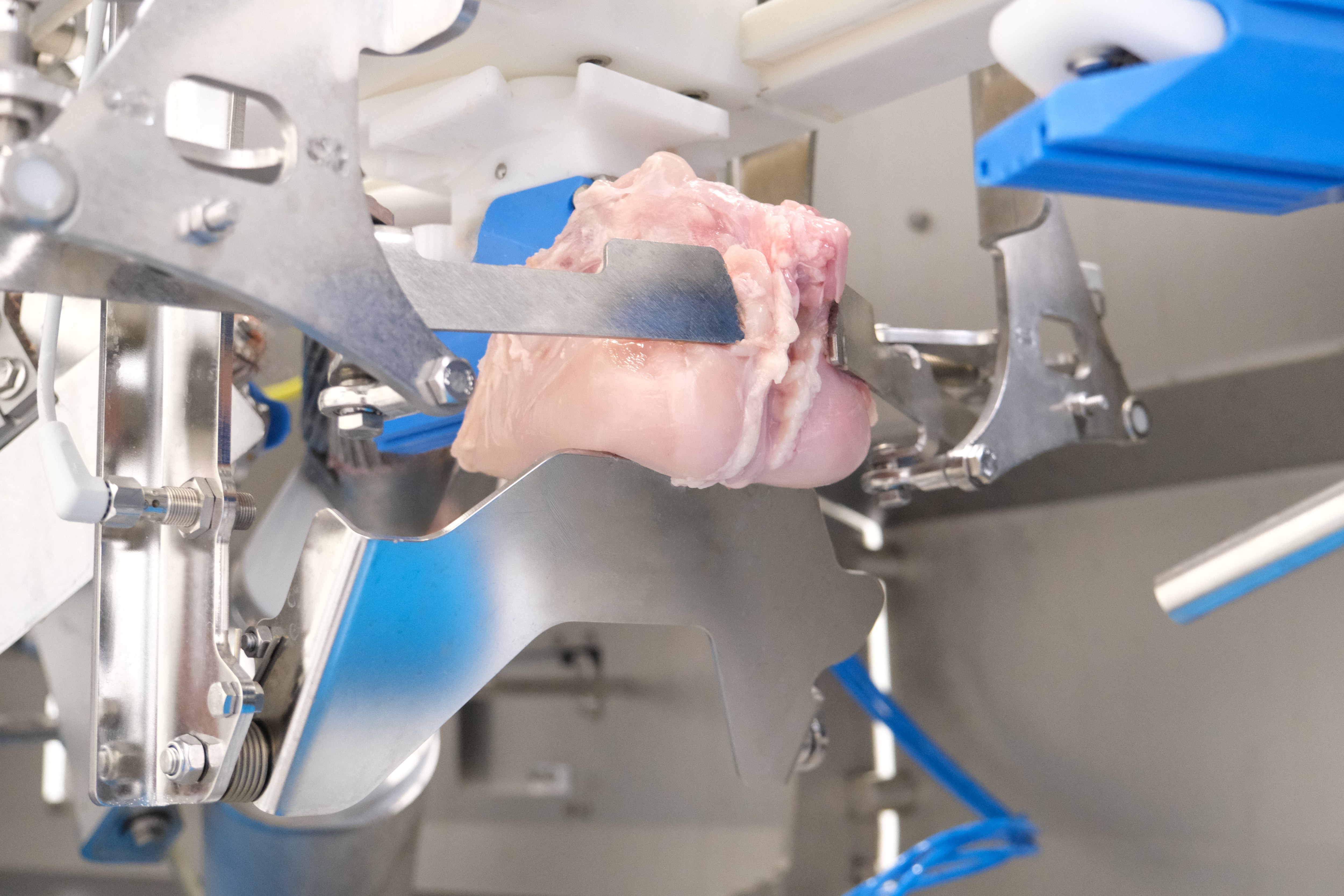
- Preparation at cut-up. Accurate anatomical cutting of the wing knuckle is essential for precise machine cutting and scraping. The breast must also be prepared to fit the loading saddle correctly. Poor preparation can compromise yield and performance further down the line.
- Consistent product loading. Even the most advanced machine depends on correct and consistent product positioning.
The message is clear: consistent deboning performance requires a well-controlled process from farm to finished product. Every step matter, and the quality of each handover influences the result.
Front Half Deboner 6630: Automation Designed for Yield, Quality and Capacity
Choosing the right deboning platform is about finding a solution that addresses the challenges of modern poultry processing. The BAADER Front Half Deboner 6630 combines high capacity, intelligent product adaptation and processing flexibility to help poultry processors get more from every front half.
Increase capacity without increasing labour
With a capacity of up to 6,000 front halves per hour and minimal labour requirements, the Front Half Deboner 6630 helps processors increase throughput while reducing dependence on manual operations. It is designed to deliver reliable performance in an environment where skilled labour is increasingly difficult to find.
Optimise yield across different product sizes
The size-adaptive deboning process adjusts to individual product dimensions, supporting consistent harvesting performance and high yield across different bird sizes.
Produce a wider range of products
The modular design allows the machine to be configured with different processing units to match your product requirements and market demands.
Product options include single and butterfly fillets, with or without tender attached, tender fillets, back meat and by-products such as wishbones, skin, keel bone ribbon and cartilage.
An optional tendon clipping module removes protruding sinew from the tender, delivering a cleaner and more presentable final product.

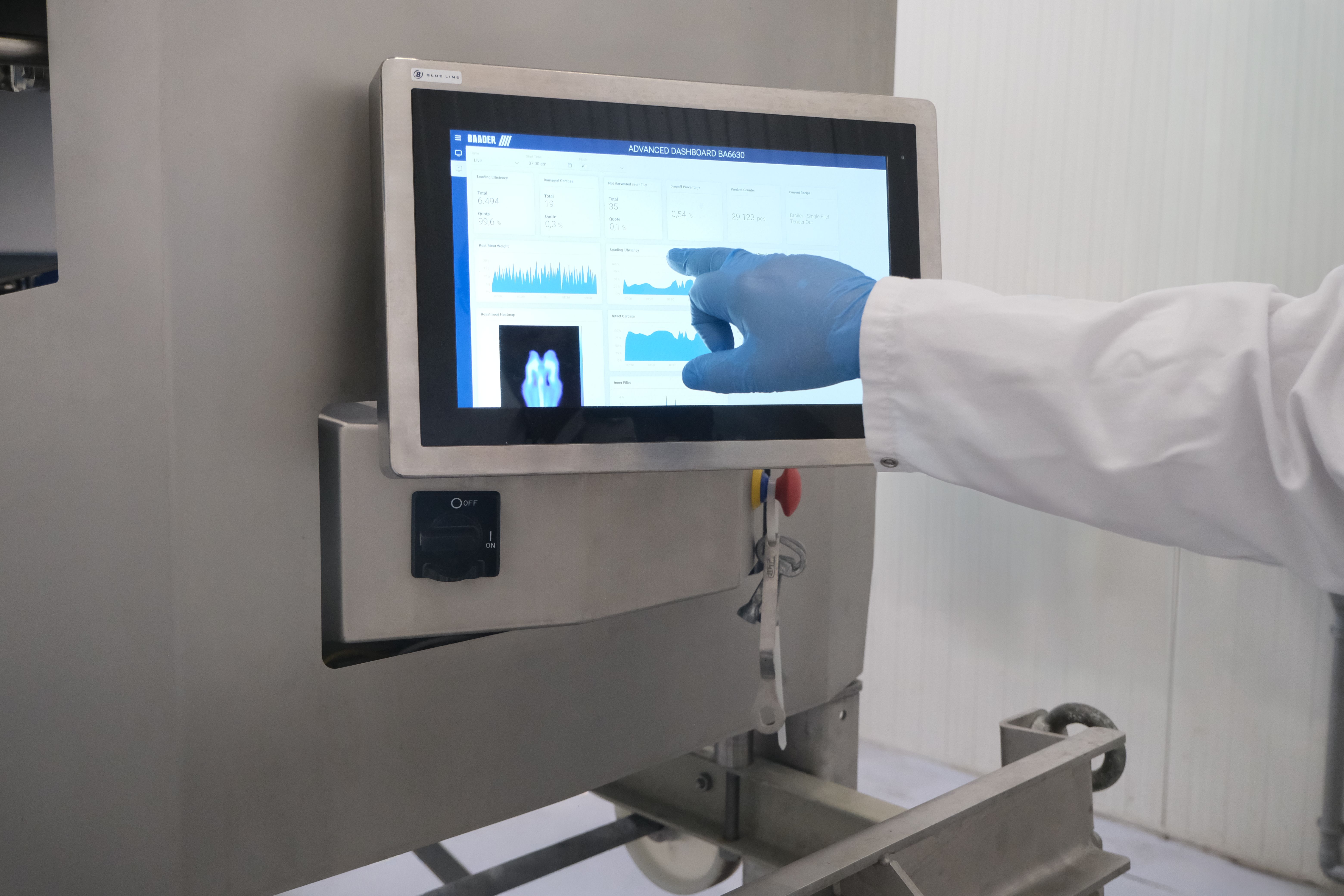
- Maintain consistent performance across shifts. An intuitive screen interface and pre-set recipes make it easy for operators to switch between production setups. Recipes can be created and adjusted as requirements change, helping reduce setup time and minimize the risk of operator error.
- Simplify cleaning, maintenance and operation. Designed with accessibility and operational safety in mind, the Front Half Deboner 6630 features large lifting doors that provide quick access to processing tools. Saddles can be removed without tools, while quick-release systems make changing wishbone knives and tendon clippers straightforward. Transparent doors allow operators to monitor the process, while safety interlocks immediately stop the machine when the doors are opened.
- Maximize production in a compact footprint. With a total length of just 20 metres, including the loading platform, the Front Half Deboner 6630 is designed to integrate into both new and existing production lines. Its compact footprint helps processors increase capacity while making better use of available factory space.
- Turn production data into better decisions. The machine connects to BAADER One Edge for secure machine data exchange. In addition, the optional ClassifEYE vision camera can be installed after fillet harvesting to monitor residual meat on the carcass and identify opportunities to improve yield.
Make Every Front Half Count
Automation will not solve every challenge in poultry processing. Raw material variations, upstream preparation and process control will always play an important role in the final result.
However, the right breast deboning platform can make a significant difference. It enables you to increase production capacity without a corresponding increase in labour, produce a wide variety of high-quality products and maintain consistently high deboning performance.
Ultimately, it is about getting more value from every bird – with the capacity, flexibility and consistency needed to meet tomorrow's production demands.
Explore the Front Half Deboner 6630 and talk to a BAADER poultry specialist about your product requirements.