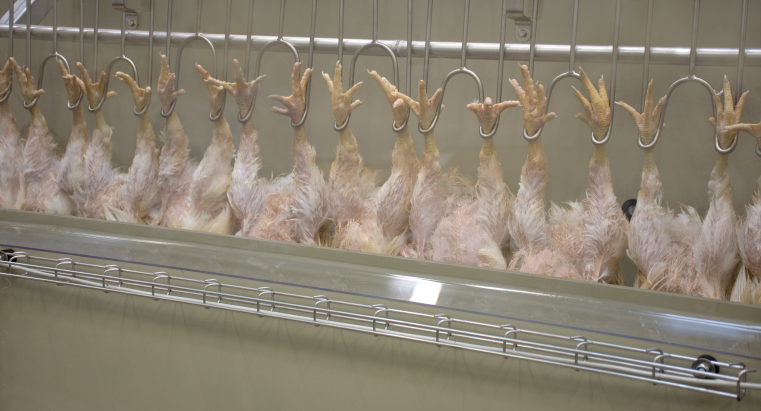
When the process is correctly designed and controlled, an electrical current passing through the water bath and the bird’s body induces unconsciousness before slaughter. When conditions are inconsistent, however, the consequences can extend well beyond the stunner itself: birds may experience avoidable stress or ineffective stunning, while strong muscle contractions can contribute to haemorrhaging, blood splashes, fractures and other defects that reduce product value.
The management challenge is therefore not simply to apply more electrical energy. It is to establish a stable process that delivers a rapid, effective stun and maintains unconsciousness until death, while minimizing unnecessary carcass damage.
Stunning Performance Starts Before the Water Bath
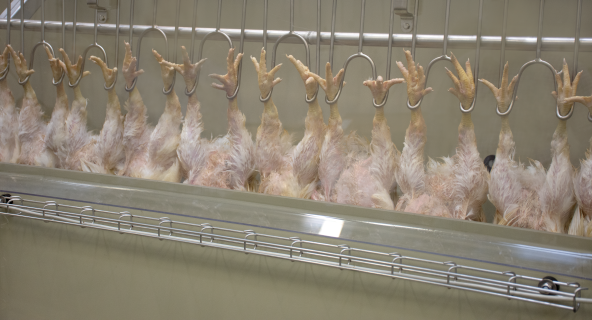
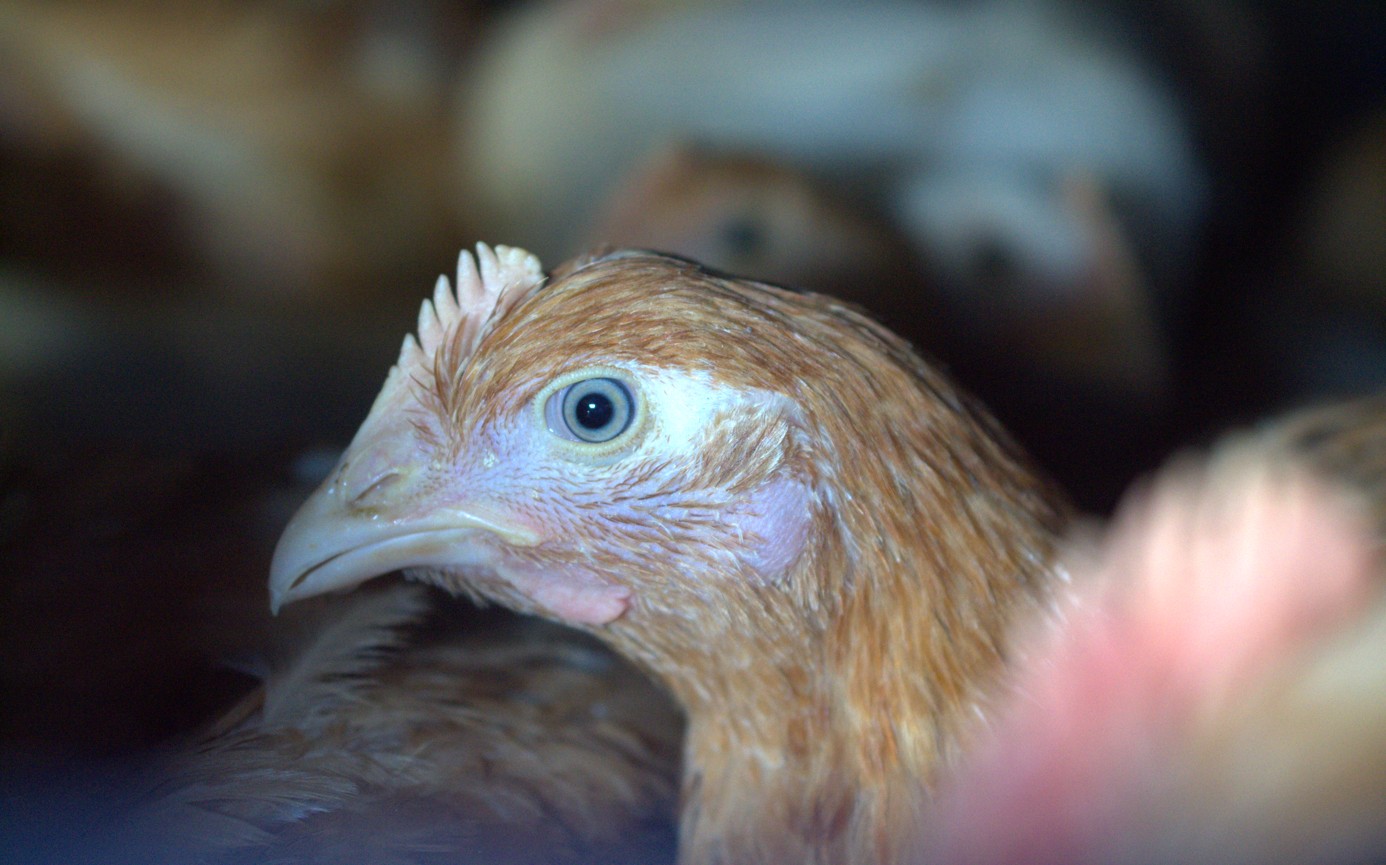
The conditions between shackling and stunning have a direct influence on process consistency. Noise, bright lighting, uncontrolled movement, excessive wing flapping and contact with surrounding equipment can increase stress.
A calm, predictable approach is the foundation for a reliable stun. Several practical measures can support this objective:
- Blue lighting in the live-bird area can help calm birds and reduce continuous wing flapping.
- Correct shackling provides firm, consistent contact between the legs and shackles, supporting a reliable electrical pathway.
- Keeping the slaughter line full can improve stunning and reduce swinging and movement of shackled birds.
- A breast comforter can help stabilize birds and limit excessive movement.
- The line between shackling and the water bath should be as short and straight as possible, without unnecessary bends, inclines, declines or sudden changes in direction.
These are not isolated design details. Together, they reduce variation before the bird reaches the water and improve the likelihood of a calm, controlled entry. For plant managers, this means that stunning performance should be assessed as part of the entire live-bird-to-stunner process, not as a standalone equipment setting.
Validate Unconsciousness on the Line
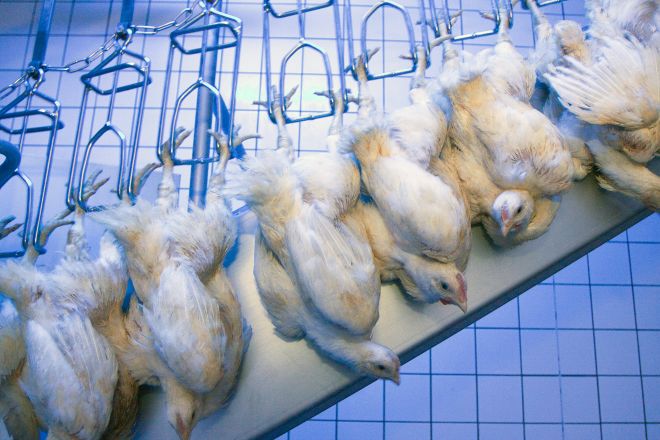
An effective stun must achieve two outcomes: unconsciousness must occur rapidly, and it must be maintained until death. If consciousness returns before the throat cut, the welfare consequences are serious and the process has failed at its most important objective.
In day-to-day operations, managers therefore need robust physical indicators and a consistent observation routine to evaluate stunning performance.
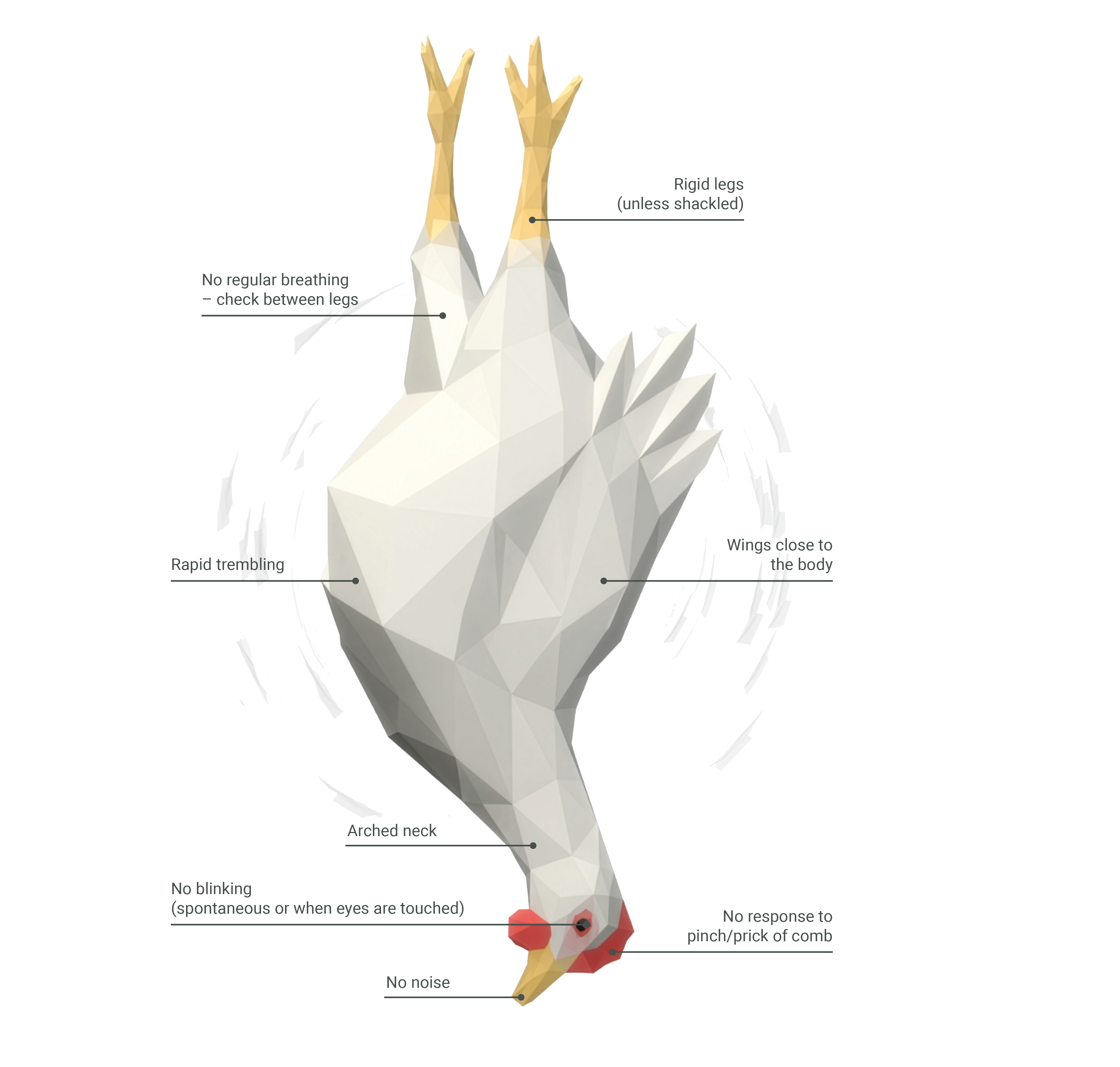
The absence of corneal and nictitating membrane reflexes is a physical indicator with the strongest relationship to consciousness and unconsciousness in broilers following electrical stunning. Other useful observations include the absence of rhythmic breathing, spontaneous blinking and vocalization. Neck tension, wing or body movements, eye closure and the presence or absence of tonic seizure are less reliable when used alone.
Operators should also understand the normal sequence of responses after stunning. The tonic phase is associated with rigid posture, an arched neck, fixed wings and no breathing. The clonic phase involves involuntary kicking, wing flapping and trembling. During exhaustion, the neck relaxes and the wings may droop. Rhythmic breathing, spontaneous blinking, a corneal reflex or righting behaviour can indicate recovery and require immediate attention.
This knowledge should be translated into a documented monitoring procedure.
Electrical Settings Require a Controlled Compromise
Stunning performance and carcass quality are influenced by current, voltage, frequency, waveform, exposure time and the electrical resistance of individual birds. These variables interact, which means that changing one setting can affect both welfare outcomes and product quality.
Higher voltage and current can increase stunning effectiveness, but stronger muscle contractions can also reduce carcass quality. Low-frequency stunning is associated with more intense contractions and greater risk of carcass damage. At low frequencies combined with high current, the likelihood of cardiac arrest also increases.
Higher frequencies, including frequencies of 400 Hz or more, generally reduce muscle contractions and can improve carcass quality. However, at very high frequencies it may become more difficult to maintain unconsciousness until the throat cut. An ineffective stun can produce severe bird reactions, potentially creating a different set of welfare and quality problems.
The practical implication is clear: there is no universal setting that can be transferred from one plant to another without validation. The optimal operating window must be established for the specific equipment, flock characteristics, line speed, exposure time, electrical contact and regulatory requirements of the plant.
A useful management approach is to use a scorecard for stunning-related damage. Test and compare settings under controlled conditions, record the frequency and severity of defects, and select the configuration that achieves an effective stun with the least damage. This turns carcass quality from a subjective observation into a trend that can be monitored and improved.
Resistance is a Process Variable, Not a Fixed Value
Electrical resistance varies between birds and within flocks. Factors that can change resistance include body size and shape, breed, fat and muscle composition, hydration, water conductivity, shackle contact and equipment condition.
This variation helps explain why a setting that appears stable on a control panel can produce different results in the birds. Management should therefore pay close attention to the conditions that determine current flow:
- The electrode should extend over the full length of the bath to support a uniform electrical charge.
- The electrode and water bath should be cleaned and maintained.
- Water conductivity should be sufficient, particularly at the start of production. A saline concentration between 0.1-1.0 % (w/v) is optimum for electrical water-bath stunning. Addition of salt (food grade sodium chloride) can be used to reach this saline concentration at the start of production.
- The guide rail and shackle connection must maintain continuous contact.
- Birds should be positioned fully into the shackle, with good contact between the legs and the metal.
- Wetting the shackle before shackling can improve conductivity and contact quality.
- Water withdrawal time and dehydration should be considered because dehydration can increase contact resistance.
These checks belong to preventive maintenance and start-up routines, not only in investigations after a quality problem has appeared.
Defects Provide a Diagnostic Signal
Stunning-related defects are not simply a downstream quality issue; they can reveal instability at the stunning point. Strong contractions may result in haemorrhages around the wishbone, damage to the triangular muscle in the inner leg, haemorrhages in the tender and fillets, blood splashing around the armpit and wing knuckle, carcass instability, broken bones or joint dislocations. Red wing tips can have multiple causes, including wing flapping, ineffective bleeding, stunning and picking, so they should be assessed alongside other process evidence.
Prevent Pre-Shocks and Incomplete Circuits
Some of the most damaging failures occur before the bird is properly stunned. A wing or other wet body part contacting the electrified water first can create a painful pre-shock. The bird may retract its neck, avoid the water and remain conscious.
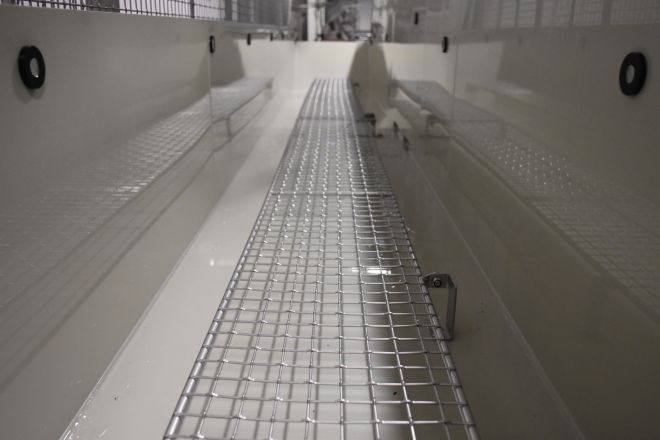
The entrance ramp should be dry, electrically insulated and non-conductive so that the head enters the water first. Water nozzles should not be installed inside the stunner or positioned so that birds’ feet or bodies are sprayed immediately before entry. Current leakage through wet equipment, conductive breast comforters or the infeed plate must also be avoided.
A Management Priority, Not Just an Equipment Setting
For poultry processors, water-bath stunning should be managed as an integrated system. Bird handling, line design, shackling, water conductivity, electrical settings, equipment maintenance, welfare observations and carcass data all contribute to the result.
The most effective plants will combine routine line observations with structured defect scoring and periodic technical validation. They will also treat changes in flock profile, hydration, season, line speed or equipment condition as potential sources of variation.
The objective is not to maximize current or to pursue the lowest possible defect rate in isolation. It is to achieve a reliable operating window in which birds enter calmly, make correct electrical contact, become and remain unconscious, and leave the process with minimal quality damage. That balance protects welfare and helps preserve the economic value of every bird processed.
Visit BAADER Water-Bath Stunning to learn more.